Creating an Ocean Foam Sensory Bin envelops you in tactile bliss, inviting your senses to slow down. The smooth, colorful foam drifts like gentle waves, reflecting soft light and dancing with each movement. As your fingers glide through the foam’s textures, it brings an instant sense of calm, allowing you to be present in the moment. This DIY project not only creates a playful sensory environment but also fosters tranquility and creativity, inviting gentle exploration and joyful interaction. You may also find Colorful Bubble Foam Sensory Play useful.
Why Make This Ocean Foam Sensory Bin
Crafting an Ocean Foam Sensory Bin brings about a serene atmosphere, a place where the rush of daily life fades away. The soothing qualities of sensory play help individuals reconnect with their senses, promoting mindfulness. Working with materials like foam and water provides a gentle rhythmic experience, which can lead to deeper focus and clarity. This project encourages creativity, making it a wonderful way to bond with children or simply enjoy moments of calm on your own. You may also find Ocean Wave Sensory Bag Cozy useful.
A Gentle Look at the Process
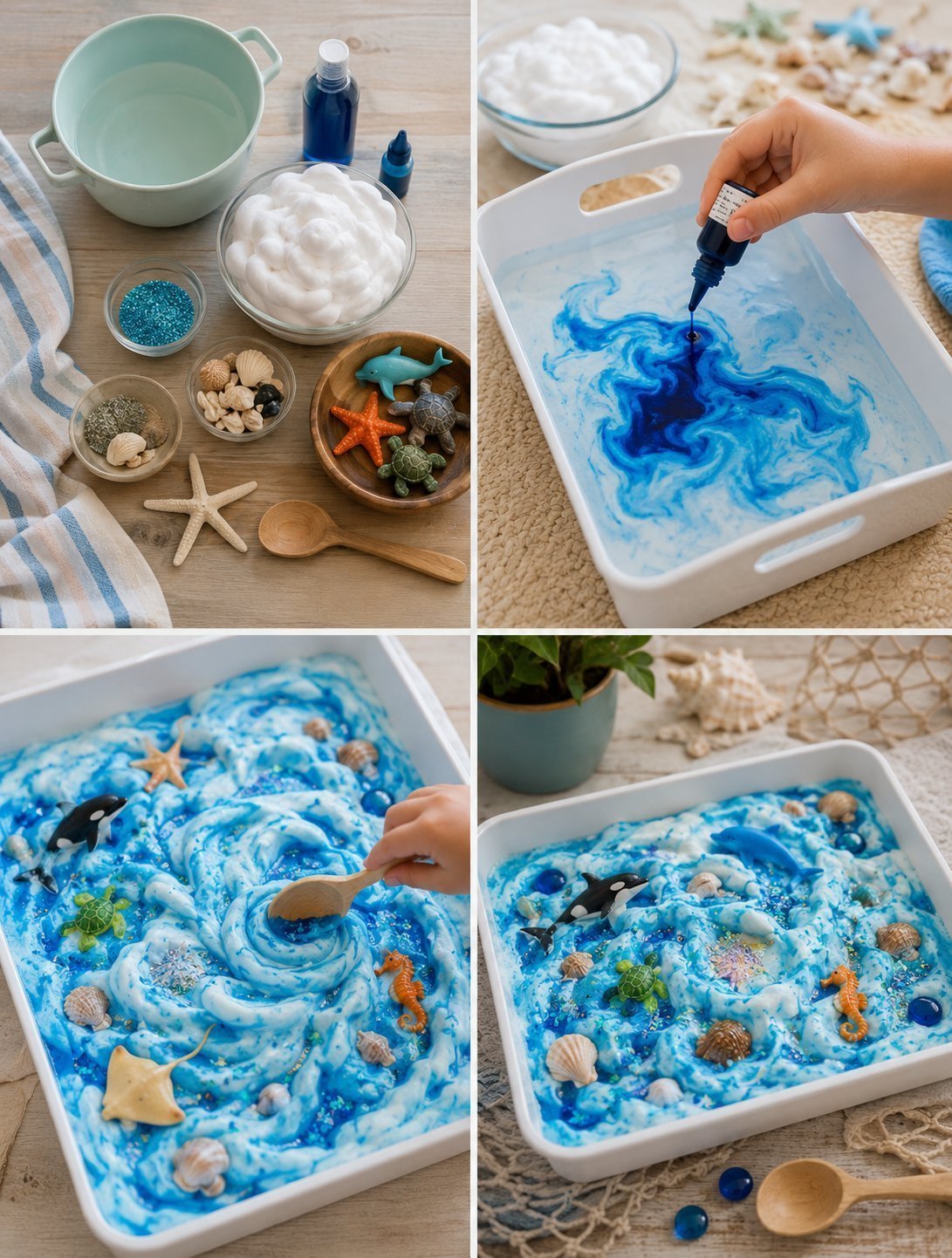
As you prepare to create your Ocean Foam Sensory Bin, visualize the soft textures and shimmering colors that will come to life. The gentle pouring of materials into your bin creates a rhythm, while the cool foam invites exploration. With every squish and squeeze, sounds emerge—soft plops and gentle splashes—that enhance the sensory experience. This project flows smoothly, allowing for moments of reflection and peaceful creation. You may also find Bright Hanging Ocean Creatures useful.
Materials You’ll Need
- Foam soap (or shaving cream)
- Blue food coloring (optional for ocean vibe)
- Large bin or container for play
- Clear plastic objects (like sea creatures)
- Cups and scoops for measurement
- Towels for easy cleanup
These materials are easy to find and perfect for crafting a sensory-rich experience. The foam soap gives that fluffy texture, while the clear objects add a visual element that encourages discovery and imagination. You may also find Bubble Foam Play Cozy Joy useful.
Step-by-Step Directions
Prepare Your Bin: Start by placing your bin in a comfortable spot. Ensure the area is protected with towels for any potential spills.
Mix the Foam: Pour foam soap into the bin. If you’d like an oceanic hue, add a few drops of blue food coloring and mix gently to keep the bubbles intact.
Create Ocean Life: Place your clear plastic sea creatures into the foam. Let them rest gently within the mixture and partially buried for hidden discoveries.
Add Sensory Elements: Incorporate cups or scoops to encourage pouring and measurement. This adds a playful touch to the sensory experience.
Invite Play: Allow time for gentle exploration. Encourage the feeling of the foam, the coolness of the water, and the excitement of finding creatures hidden within.
Enjoying the Finished Piece
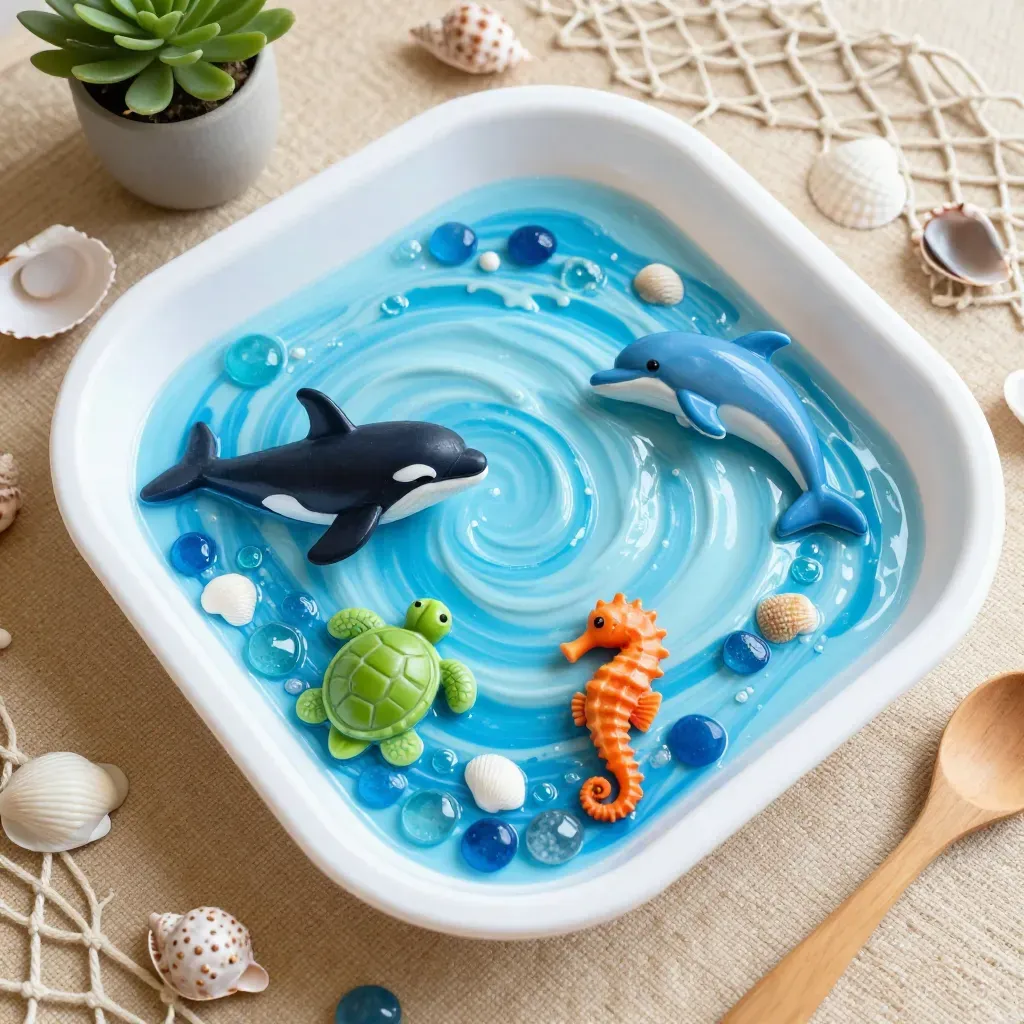
Once your Ocean Foam Sensory Bin is complete, the joy it brings can be truly magical. Use it in quiet playtime or as a calming resource during busy moments. Children can immerse themselves in the textures, learning about ocean life dynamically. It serves not just as a play piece but as a soothing retreat to encourage creative thinking and focus.
Keeping It for Later
To preserve your Ocean Foam Sensory Bin for future enjoyment, store it in a lidded container. If the foam begins to deflate, you can easily create more using the same materials. Simply refresh it when needed to maintain that inviting texture and sensory experience.
Gentle Tips & Variations
- Experiment with different colors by adding other food dyes to create a vibrant sea world.
- Introduce new elements like seashells or pebbles for a tactile addition.
- Consider adding essential oils to the foam for a calming aroma that enhances the sensory play.
- For a seasonal twist, explore colors and themes that reflect various ocean environments.
FAQs About Ocean Foam Sensory Bin
What age is this sensory bin suitable for?
This sensory bin is suitable for various ages, from toddlers to older children, providing a rich experience for everyone.
How do I clean up after play?
Simply use towels to absorb any spills and wash the bin with soap and warm water. The foam can often be rinsed away easily in the sink.
Can I reuse the foam?
While the foam is best enjoyed fresh, you can recreate it easily using the same ingredients whenever you want a refreshing sensory experience.
What if my child has sensory sensitivities?
Start with smaller amounts and allow them to engage at their own pace. Adjust the setup to present calming options that work best for their comfort level.
Conclusion
Creating your Ocean Foam Sensory Bin offers a tranquil sensory experience that enriches play and encourages mindfulness. For additional insights on sensory play activities, check out Ocean Foam Sensory Play – News with Naylors. Embrace this moment of calm and let your creativity flow as you explore the textures, colors, and wonders of your DIY project.


